Project work

Case studies

Four worked examples showing how a problem was diagnosed, what was actually done about it, and what changed as a result.

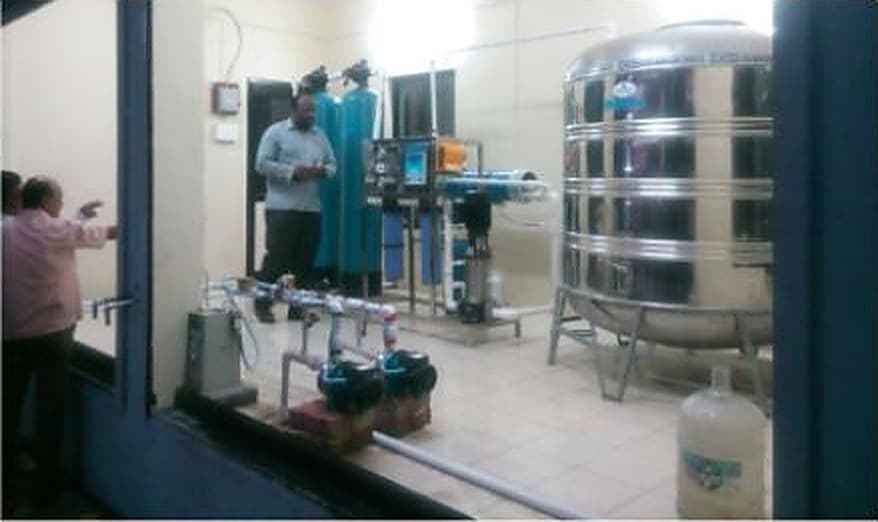
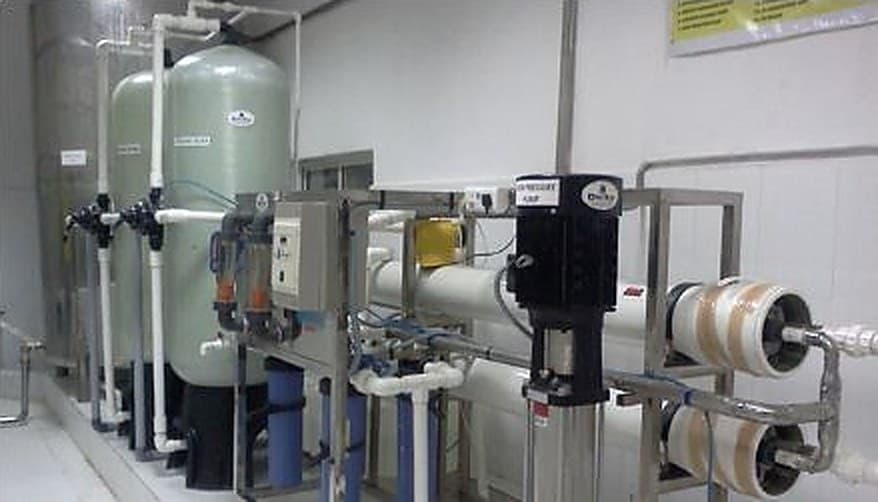
Indoor reverse osmosis plant with membrane housings and FRP pressure vessels after retrofit
Output restored
5,000 LPH
Cost vs. replacement
Approx. 30%
Membrane life
Back to 3 years
Downtime
Phased, 4 days
Pharmaceutical formulationsIndustrial RO Plant · Upgradation & RetrofittingVisakhapatnam, Andhra Pradesh

Restoring a failing 5,000 LPH RO plant without replacing it

A four-year-old RO plant had lost a third of its output and was consuming membranes annually. The client had budgeted for full replacement. The actual fault was upstream.

The challenge

Permeate output had fallen from 5,000 LPH to roughly 3,300 LPH, and membranes were being replaced every twelve months against an expected three-year life. Feed pressure had been progressively increased to compensate, which accelerated the fouling further. The original supplier had quoted for a complete new plant.

What we did

  1. 01Full feed water analysis, which showed silica and hardness well above what the existing antiscalant dose could control
  2. 02Membrane autopsy on a removed element, confirming carbonate scaling rather than biofouling or oxidation damage
  3. 03Resized pre-treatment: additional softening capacity ahead of the membranes and a corrected antiscalant dosing rate
  4. 04High-pressure pump overhauled and the array re-staged to restore crossflow velocity across the tail elements
  5. 05Conductivity and differential-pressure instrumentation replaced so operators could see fouling develop
We had asked for a full replacement and they came back recommending a retrofit instead.
Works Manager, pharmaceutical formulations
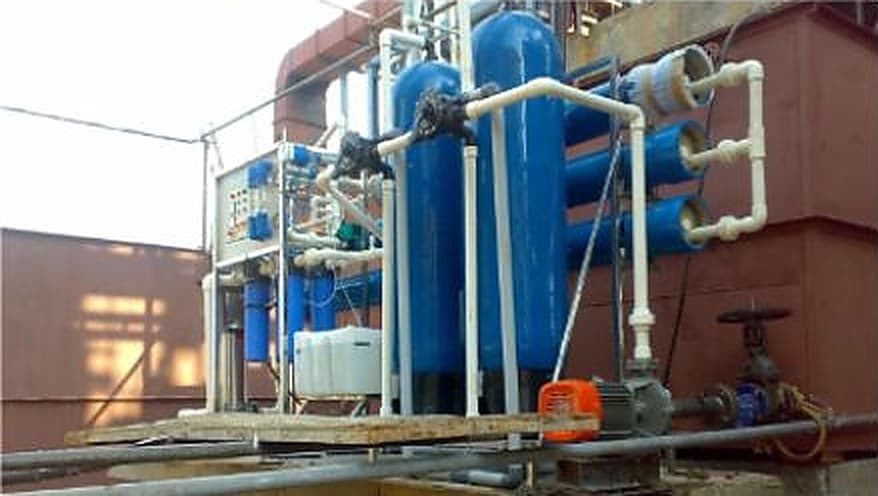
Bank of pressure vessels and storage tank forming an iron removal and softening train
Treated iron
Below 0.3 mg/L
Treated hardness
Below 5 mg/L
Staining complaints
Resolved in 2 weeks
Resin life
Restored to normal
Residential townshipIron Removal Filter · Water SoftenerHyderabad, Telangana

Ending borewell staining across a 240-flat township

Residents blamed the plumbing for persistent yellow-brown staining. The cause was dissolved iron — and an earlier installation had the treatment sequence backwards.

The challenge

Water ran clear at the tap but stained sanitaryware and greyed laundry across the whole development. A softener installed two years earlier by another contractor had failed within a year, with badly fouled resin. Residents were pressing the association for a resolution.

What we did

  1. 01Borewell sampling that identified dissolved ferrous iron at 4.2 mg/L alongside hardness of around 520 mg/L as CaCO3
  2. 02Diagnosis of the root failure: the softener had been placed ahead of any iron removal, so iron had fouled the resin irreversibly
  3. 03Aeration-based oxidation and catalytic iron removal filtration installed as the first treatment stage
  4. 04Softener resin replaced and the vessel repositioned downstream of the iron filter, in the correct sequence
  5. 05Differential-pressure backwash triggering specified, so the filter only backwashes when the bed actually needs it
AQUASTAG identified dissolved iron in the borewell and installed an iron removal filter ahead of the softener.
Secretary, residents welfare association
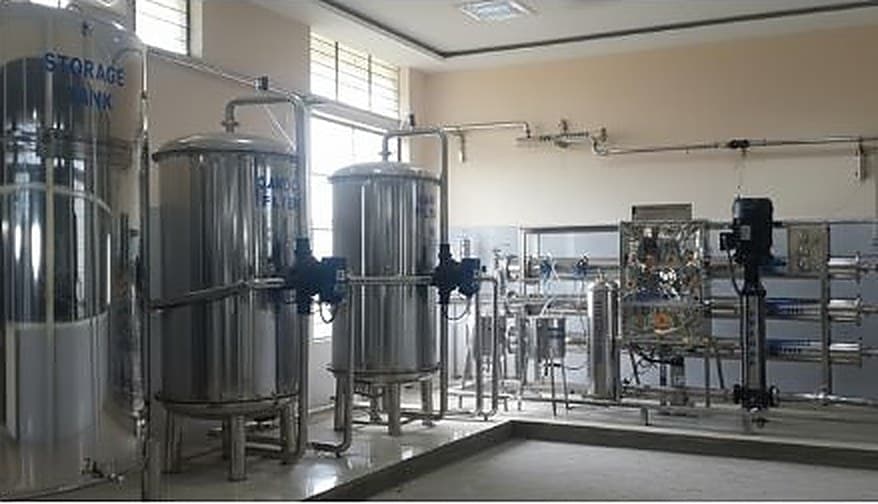
Treated water storage tank and softening plant installed in a hotel utility room
Treated hardness
Below 5 mg/L
Detergent use
Materially reduced
Scale complaints
Eliminated
Payback
Within year one
HospitalityWater SoftenerKochi, Kerala

Cutting laundry chemical spend at an 80-room hotel

Detergent consumption was running well above industry norms and guests were complaining about scale on shower fittings. Hardness was the common cause of both.

The challenge

The municipal-plus-borewell blend was testing at roughly 380 mg/L as CaCO3. Hard water was suppressing detergent performance in the laundry, scaling the calorifiers and leaving visible deposits on bathroom fittings — a direct guest-experience issue in a property competing on presentation.

What we did

  1. 01Hardness profiled across both supply sources and through the seasonal swing
  2. 02Duplex softener sized on measured hardness and peak laundry draw, so soft water remains available during regeneration
  3. 03Meter-initiated regeneration specified, so salt is consumed against actual volume rather than on a fixed timer
  4. 04Softened supply routed to laundry and hot water circuits; drinking points kept on a separate purified circuit
  5. 05Housekeeping and engineering staff trained on salt top-up and the monthly hardness check
The central softener paid for itself inside the first year on chemical savings alone.
General Manager, boutique hotel
Compact packaged treatment plant with FRP vessels and pipework installed at a residential development
Treated BOD
Below 10 mg/L
Treated TSS
Below 10 mg/L
Water reused
Landscape irrigation
Odour complaints
None recorded
Residential townshipSewage Treatment PlantVijayawada, Andhra Pradesh

A mini STP under a clubhouse — with no odour complaints

A compact STP had to fit beneath an occupied clubhouse and meet reuse-grade output — with odour and noise treated as design constraints, not afterthoughts.

The challenge

The available footprint sat directly below the community clubhouse. Any odour or blower noise would have made the amenity unusable, and the development wanted treated water good enough to reuse on landscaping rather than merely compliant for discharge.

What we did

  1. 01MBBR process selected for its compact footprint and tolerance of the variable load a residential block produces
  2. 02Fully covered tankage with managed venting, and blowers installed inside an acoustic enclosure
  3. 03Treatment train extended past discharge standard to reuse grade, with pressure sand and activated carbon polishing plus disinfection
  4. 04Dedicated reuse storage and pumping installed to feed the landscape irrigation network
  5. 05Automated blower and pump sequencing so routine operation needs no dedicated operator
They covered the tanks and enclosed the blowers as part of the design rather than as an extra.
Facility Manager, residential township

Client feedback

What our clients say

Water treatment is bought on trust, because most of what it does is invisible. These are the outcomes our clients describe.

Our borewell was running at 1,150 ppm and the previous plant could not hold output through a full shift. AQUASTAG re-did the pre-treatment before touching the membranes, which nobody else had suggested. Two years on, the permeate is still under 40 ppm and we have not replaced a single element.
Srinivas ReddyPlant Head, food processing unit · Medak, TelanganaRO Plant
We had scale building up in the boiler within weeks of every descaling. They tested the water, showed us the hardness figures and sized the softener against our actual steam load rather than quoting a standard model. Salt consumption came in almost exactly where they said it would.
Karthik SubramanianMaintenance Manager, textile processing · Coimbatore, Tamil NaduWater Softener
Every bathroom in the block had yellow-brown staining and the residents were convinced it was the plumbing. AQUASTAG identified dissolved iron in the borewell and installed an iron removal filter ahead of the softener. The staining stopped completely within a fortnight.
Lakshmi NarayananSecretary, residents welfare association · Chennai, Tamil NaduIron Removal

Your project

Every one of these started as a problem someone could not explain

Staining nobody could trace, output that had quietly halved, a plant that smelled. Describe what you are seeing and we will work out what is actually causing it.

Tell us what your water is doing. We will tell you what it needs.

Send us your requirement and an engineer responds within 24 working hours — with a recommendation, not a sales pitch.