
Biological treatment · Water reuse
Sewage Treatment Plants (STP)
Compact biological sewage treatment plants that meet pollution control board discharge norms and turn wastewater into a reusable resource for flushing and landscaping.
Every residential township, hotel and hospital above a defined size is required to treat its own sewage before discharge. Compliance is the legal driver, but the commercial case is usually stronger: a properly designed plant turns a liability into treated water you can put back to work on flushing, gardening and cooling make-up, cutting fresh water purchase substantially.
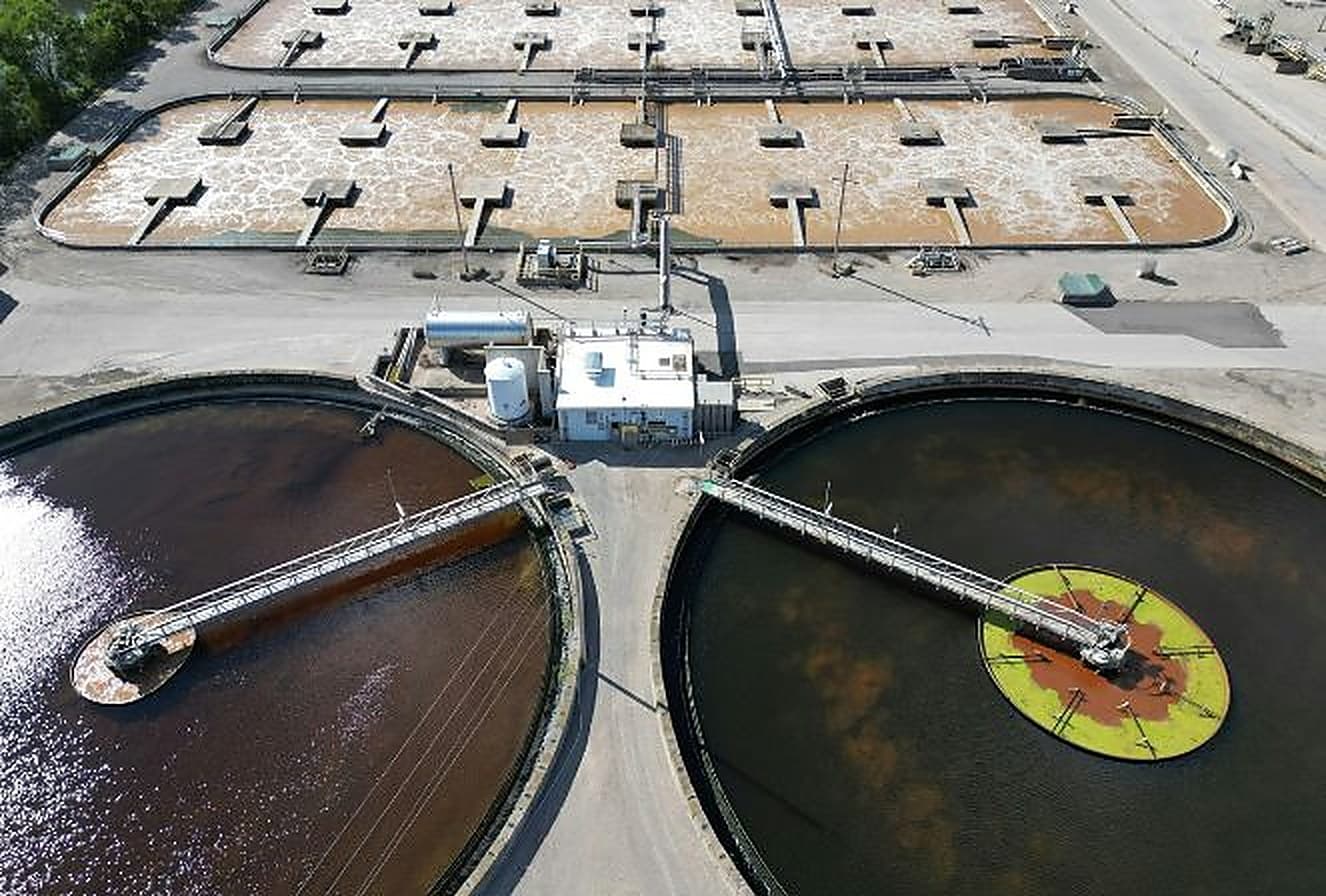
AQUASTAG builds compact biological plants using attached-growth and sequencing batch technologies. Sewage passes through screening and equalisation, then into a biological stage where a cultivated microbial population consumes the organic load. Solids are separated, the clarified stream is filtered and disinfected, and treated water is stored for reuse.
Plants are engineered around the load your site actually generates and the discharge standard you must meet, with odour containment and noise control treated as design requirements rather than afterthoughts — because in a residential or hospitality setting they determine whether the plant is tolerable to live beside.
Applications
- Residential townships and gated communities
- Hotels, resorts and convention centres
- Hospitals and healthcare campuses
- IT parks and commercial office buildings
- Educational campuses and hostels
How it works
The process, stage by stage
Move your cursor across this section — the surface responds like water.
Screening and equalisation
Coarse solids are screened out and flow is equalised in a balancing tank, so the biological stage receives a steady load instead of peaks.
Biological treatment
Aerated microbial culture — on MBBR media or in an SBR cycle — metabolises dissolved and suspended organic matter, reducing BOD and COD.
Clarification
Biomass is separated from the treated stream by settlement. Sludge is partly returned to maintain the culture and the excess is drawn off.
Filtration and disinfection
Pressure sand and activated carbon filtration polish the clarified water, followed by chlorination or UV to meet the discharge or reuse standard.
Engineering detail
What you get with an AQUASTAG stp system
Sized to your actual load
Designed from occupancy, per-capita generation and peak flow, so the plant handles real conditions rather than a nominal figure.
Compliance-led design
Built to meet the discharge parameters applicable to your category, with sampling points that make demonstrating compliance straightforward.
Odour and noise contained
Covered tankage, vent management and acoustically enclosed blowers — essential when the plant sits under a residential block.
Treated water put to use
Reuse circuits for flushing, landscaping and cooling make-up, with the storage and pumping to distribute it.
Modular and expandable
Phased capacity for developments that are still filling up, so you are not paying to aerate an empty tank in year one.
Automated operation
Sequenced blowers, pumps and dosing under panel control, with the routine cycle running unattended.
Specifications
Technical data
| Capacity range | 10 KLD to 1,000 KLD and above |
|---|---|
| Technology options | MBBR, SBR, extended aeration, MBR |
| Construction | RCC civil, prefabricated FRP or MS packaged units |
| Treated BOD | Below 10 mg/L (reuse-grade configurations) |
| Treated TSS | Below 10 mg/L (reuse-grade configurations) |
| Disinfection | Sodium hypochlorite dosing or UV |
| Installation | Above ground, underground or basement |
| Reuse applications | Flushing, landscaping, cooling tower make-up |
Ranges shown are indicative. Final specification is confirmed against your water analysis and duty requirement.
Where it is used
Typical applications
- Residential townships and gated communities
- Hotels, resorts and convention centres
- Hospitals and healthcare campuses
- IT parks and commercial office buildings
- Educational campuses and hostels
- Manufacturing units and industrial estates
- Government and institutional buildings
- Construction and labour camps
Questions
STP — frequently asked
Straight answers, including where this system is not the right choice.
Is an STP legally required for our building?
In Telangana, projects above defined thresholds require sewage treatment and environmental clearance conditions typically make it explicit. Requirements vary by category, built-up area and location, so the practical step is to confirm what applies to your specific project before design — which we do as part of the proposal.
How much space does an STP need?
Considerably less than most clients expect. Compact MBBR and packaged plants suit basements and setback areas, and the footprint depends on capacity, technology and whether construction is RCC or prefabricated. We work to the space you have available.
Will the plant smell?
A correctly designed and properly operated plant should not. Odour almost always traces to under-aeration, overloading or neglected maintenance rather than to the technology. We design with covered tankage and vent management, and our AMC keeps the biological culture healthy — which is what actually prevents odour.
Can treated sewage be reused?
Yes, and it is usually the strongest part of the business case. Treated to reuse grade, the water is suitable for toilet flushing, landscape irrigation and cooling tower make-up. For many townships this displaces a large share of fresh water purchase and pays back a meaningful part of the plant cost.
Client feedback
What our clients say
Water treatment is bought on trust, because most of what it does is invisible. These are the outcomes our clients describe.
Our borewell was running at 1,150 ppm and the previous plant could not hold output through a full shift. AQUASTAG re-did the pre-treatment before touching the membranes, which nobody else had suggested. Two years on, the permeate is still under 40 ppm and we have not replaced a single element.
We had scale building up in the boiler within weeks of every descaling. They tested the water, showed us the hardness figures and sized the softener against our actual steam load rather than quoting a standard model. Salt consumption came in almost exactly where they said it would.
Every bathroom in the block had yellow-brown staining and the residents were convinced it was the plumbing. AQUASTAG identified dissolved iron in the borewell and installed an iron removal filter ahead of the softener. The staining stopped completely within a fortnight.
Related
You may also need
Reverse osmosis · 250 – 10,000+ LPH
Industrial & Commercial RO Plants
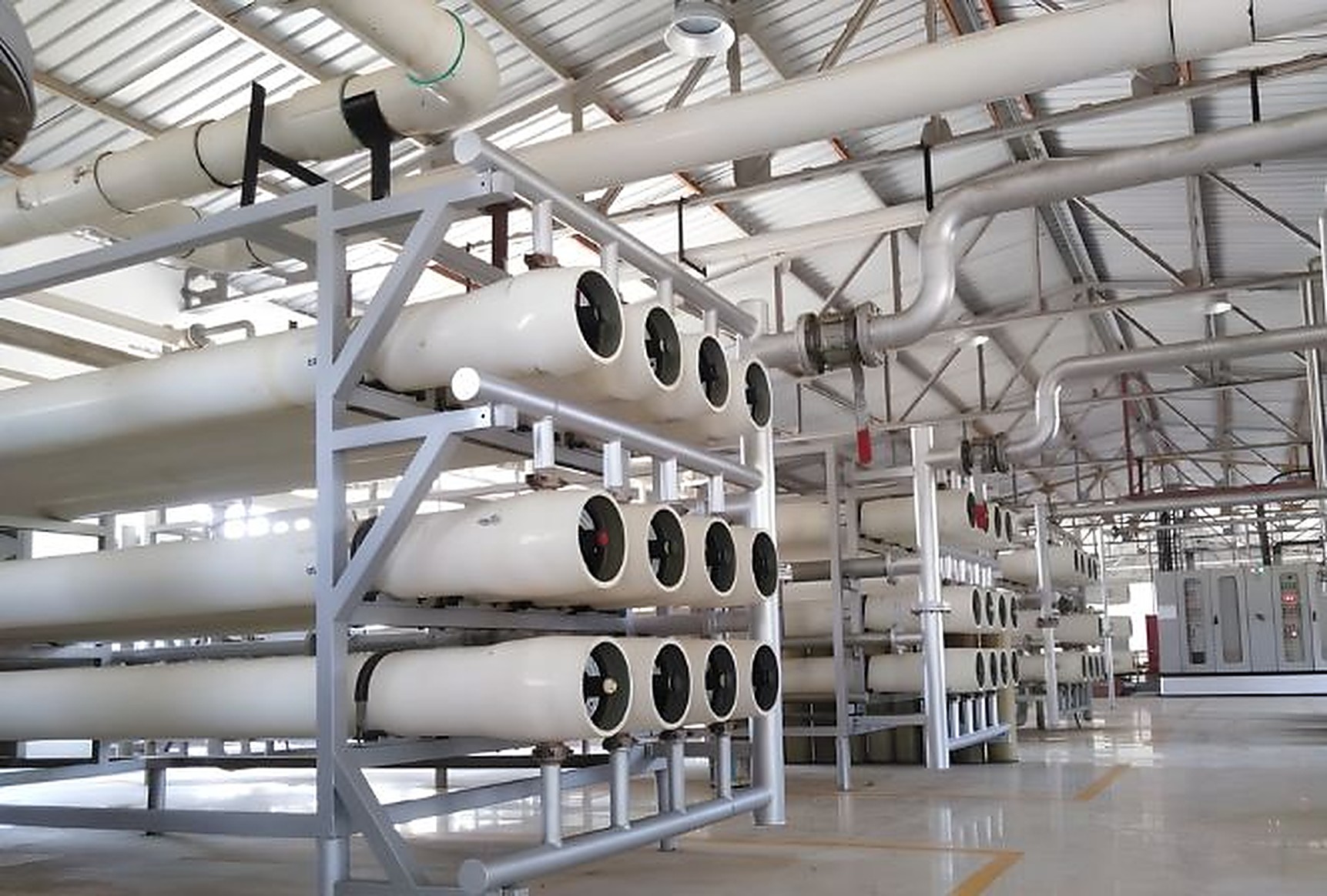
Turnkey reverse osmosis plants from 250 LPH to 10,000+ LPH — engineered pre-treatment, correctly staged membrane arrays and controls built for continuous industrial duty.
Hardness removal · Ion exchange
Water Softeners
Ion-exchange softening plants that strip calcium and magnesium out of hard borewell and municipal water, protecting boilers, chillers, laundries and every heated surface downstream.
Scale control · Zero discharge
Water Conditioners
Salt-free, zero-discharge scale control that stops limescale forming on heated surfaces while leaving the natural mineral content of the water intact.
Need a stp system sized properly?
Send us your water analysis or just describe the problem. An engineer responds within 24 working hours.