
Oxidation · Catalytic filtration
Iron & Manganese Removal Filters
Oxidation and catalytic filtration that takes dissolved iron and manganese out of borewell water — ending the red-brown staining, metallic taste and blocked plumbing they cause.
Iron is the problem people notice before they measure it. Water comes out of the tap clear, stands for a few minutes and turns yellow-brown. Sanitaryware stains, laundry greys, and anything the water touches picks up a metallic taste. In much of Telangana and Andhra Pradesh, borewells carry dissolved iron well above the 0.3 mg/L limit that BIS sets for drinking water.
The chemistry is what makes iron awkward. In the aquifer it exists as dissolved ferrous iron, which is invisible and passes straight through a conventional sand filter. Only on contact with air does it oxidise into ferric particles — which is exactly why the staining appears after the water has been standing rather than at the tap.
An AQUASTAG iron removal filter forces that reaction to happen inside the vessel instead of inside your plumbing. Water is aerated or dosed with an oxidant, the dissolved iron converts to a filterable solid, and a catalytic media bed captures it. The bed is backwashed on schedule to flush the accumulated iron to drain. Where manganese is present alongside iron — as it commonly is — the same train handles both.
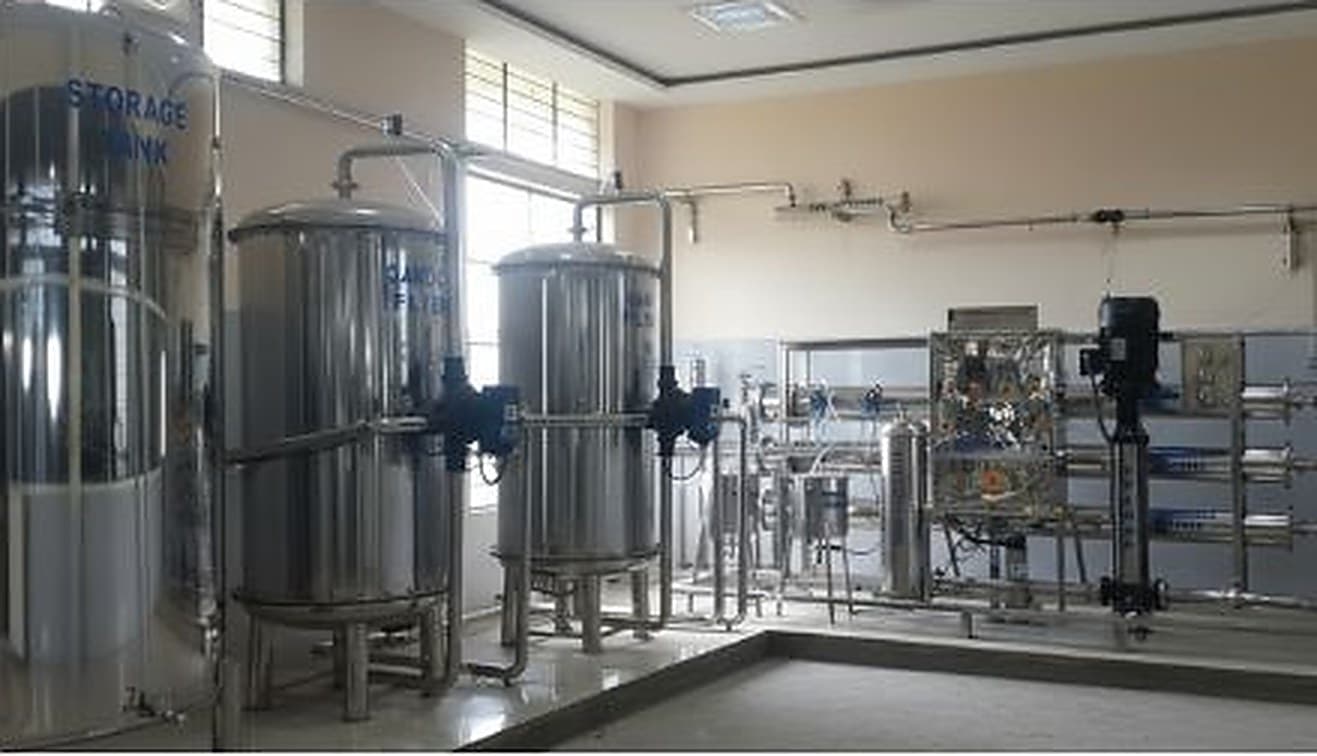
Applications
- Borewell supplies with visible staining
- Pre-treatment ahead of softeners and RO plants
- Apartments and gated communities
- Hotels, hospitals and hostels
- Textile and laundry operations
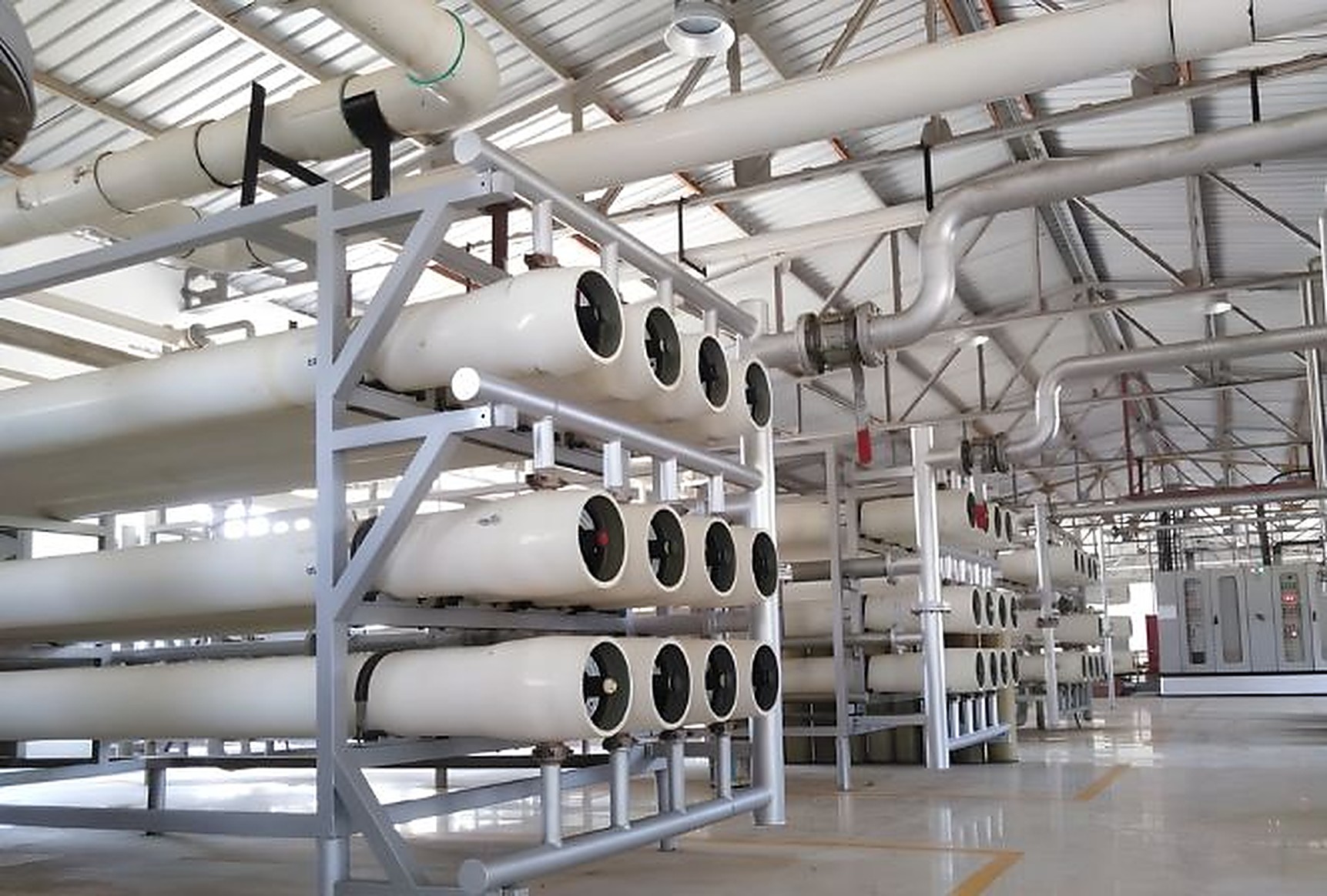
How it works
The process, stage by stage
Move your cursor across this section — the surface responds like water.
Oxidation
Aeration or a measured oxidant dose converts dissolved ferrous iron into insoluble ferric particles that can actually be filtered.
Catalytic contact
Water passes through a catalytic media bed that accelerates the reaction and traps the precipitated iron and manganese.
Filtration
Graded media polishes the stream, removing fine particulates and turbidity carried through from the oxidation stage.
Backwash
Flow is reversed on schedule to lift the bed and flush accumulated iron sludge to drain, restoring full filtration capacity.
Engineering detail
What you get with an AQUASTAG iron removal system
Sized on measured iron
Media volume and backwash frequency are calculated from your tested iron and manganese levels, not assumed from the district average.
Handles manganese too
The same catalytic train removes manganese, which almost always accompanies iron in borewell water and causes black staining.
Chemical-free option
Where iron levels allow, aeration-based oxidation avoids any chemical dosing and its associated handling and storage.
Automatic backwash
Multiport valves run the backwash cycle unattended on a timer or differential-pressure trigger.
Protects everything downstream
Iron fouls softener resin and blinds RO membranes permanently. Removing it first is what makes the rest of the plant viable.
Ends visible staining
The red-brown marks on sanitaryware, tiles and laundry stop appearing once dissolved iron is taken out at source.
Specifications
Technical data
| Capacity range | 500 LPH to 50 m3/hr and above |
|---|---|
| Inlet iron handled | Up to 15 mg/L (higher with staged design) |
| Treated iron | Below 0.3 mg/L, per BIS 10500 |
| Manganese removal | Yes, within the same treatment train |
| Oxidation method | Aeration or oxidant dosing, selected on feed chemistry |
| Media | Catalytic filtration media with graded support |
| Vessel material | FRP or epoxy-coated mild steel |
| Backwash control | Manual, time-clock or differential-pressure initiated |
Ranges shown are indicative. Final specification is confirmed against your water analysis and duty requirement.
Where it is used
Typical applications
- Borewell supplies with visible staining
- Pre-treatment ahead of softeners and RO plants
- Apartments and gated communities
- Hotels, hospitals and hostels
- Textile and laundry operations
- Food processing and beverage lines
- Packaged drinking water plants
- Village and community water schemes
Questions
Iron Removal — frequently asked
Straight answers, including where this system is not the right choice.
Why does my water look clear at the tap but turn yellow in a bucket?
Because the iron is dissolved rather than suspended. Underground it exists as ferrous iron, which is colourless and invisible. Once exposed to air it oxidises to ferric iron, which is the red-brown particulate you eventually see. That delay is the classic signature of dissolved iron, and it is precisely what an iron removal filter is designed to address.
Will a normal sand filter or RO purifier remove iron?
A sand filter will not, because dissolved ferrous iron passes straight through it. An RO membrane will reject iron, but running iron-bearing water onto a membrane fouls it rapidly and irreversibly — an expensive way to solve the problem. Iron must be oxidised and filtered out before the softener or RO stage, not by them.
Does an iron removal filter also fix hardness?
No. Iron removal and hardness removal are separate processes. Borewell water in this region frequently carries both, in which case the correct sequence is iron removal first, then softening — putting a softener ahead of the iron filter fouls the resin and shortens its life considerably.
How much water does backwashing use?
Backwash volume depends on vessel size and how much iron the bed has captured. We state the figure during sizing so it can be planned for, and where water is scarce we design the cycle to be triggered by differential pressure rather than a fixed timer, so it only runs when the bed actually needs it.
Client feedback
What our clients say
Water treatment is bought on trust, because most of what it does is invisible. These are the outcomes our clients describe.
Our borewell was running at 1,150 ppm and the previous plant could not hold output through a full shift. AQUASTAG re-did the pre-treatment before touching the membranes, which nobody else had suggested. Two years on, the permeate is still under 40 ppm and we have not replaced a single element.
We had scale building up in the boiler within weeks of every descaling. They tested the water, showed us the hardness figures and sized the softener against our actual steam load rather than quoting a standard model. Salt consumption came in almost exactly where they said it would.
Every bathroom in the block had yellow-brown staining and the residents were convinced it was the plumbing. AQUASTAG identified dissolved iron in the borewell and installed an iron removal filter ahead of the softener. The staining stopped completely within a fortnight.
Related
You may also need
Hardness removal · Ion exchange
Water Softeners
Ion-exchange softening plants that strip calcium and magnesium out of hard borewell and municipal water, protecting boilers, chillers, laundries and every heated surface downstream.
Reverse osmosis · 250 – 10,000+ LPH
Industrial & Commercial RO Plants
Turnkey reverse osmosis plants from 250 LPH to 10,000+ LPH — engineered pre-treatment, correctly staged membrane arrays and controls built for continuous industrial duty.
Point of use · RO + UV + UF
Domestic RO Purifiers
Multi-stage RO, UV and UF purifiers for homes and offices — specified against your actual tap water rather than sold from a shelf.
Need a iron removal system sized properly?
Send us your water analysis or just describe the problem. An engineer responds within 24 working hours.