Reverse osmosis · 250 – 10,000+ LPH
Industrial & Commercial RO Plants
Turnkey reverse osmosis plants from 250 LPH to 10,000+ LPH — engineered pre-treatment, correctly staged membrane arrays and controls built for continuous industrial duty.
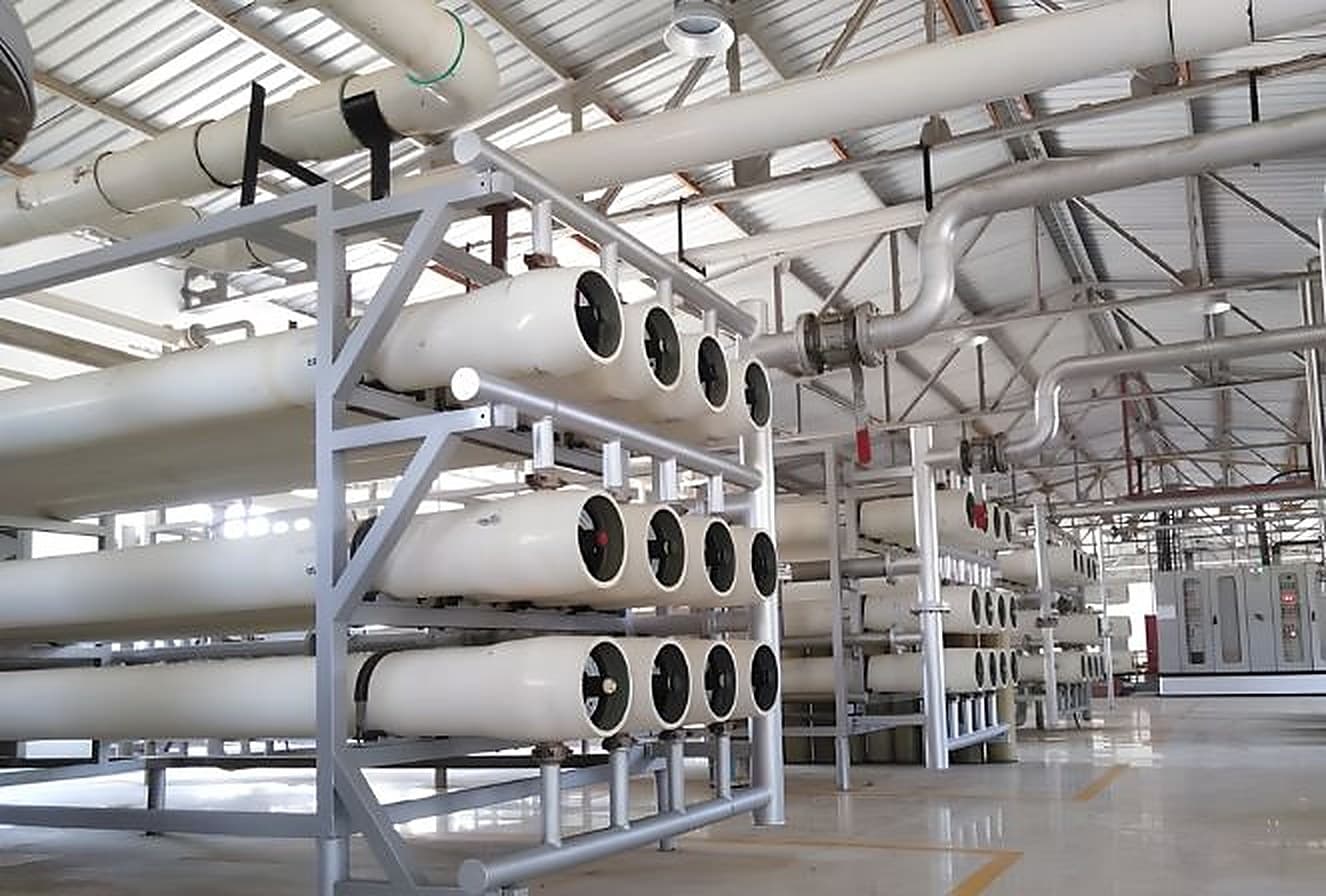
Reverse osmosis is the most effective dissolved-solids barrier available at industrial scale. Feed water is pressurised against a semi-permeable thin-film composite membrane; water passes through, while the large majority of dissolved salts, hardness, heavy metals, bacteria and viruses are rejected and carried away in a concentrate stream.
The membranes are rarely what determines whether an RO plant succeeds. Pre-treatment does. An AQUASTAG plant is built around a properly engineered front end — multigrade filtration for turbidity, activated carbon for chlorine and organics, softening or antiscalant dosing to control scaling on the membrane face, and micron cartridge filtration as the final guard. Get that sequence right and membranes deliver years of stable service. Get it wrong and they foul within months, whatever the brand on the element.
We build plants from 250 LPH for a clinic or office through to 10,000 LPH and beyond for process and packaged drinking water applications. Every system is sized from a full feed water analysis, and every handover includes documented performance figures for permeate quality, recovery and rejection.
Applications
- Pharmaceutical process and purified water
- Food processing and beverage production
- Packaged drinking water plants
- Hospitals, dialysis and laboratories
- Hotels, resorts and large kitchens
How it works
The process, stage by stage
Move your cursor across this section — the surface responds like water.
Pre-treatment
Multigrade filtration removes turbidity and suspended solids; activated carbon strips free chlorine and organics that would oxidise the membrane surface.
Scale control
A softener or dosed antiscalant prevents calcium and silica precipitating on the membrane as the concentrate stream is progressively concentrated.
High-pressure separation
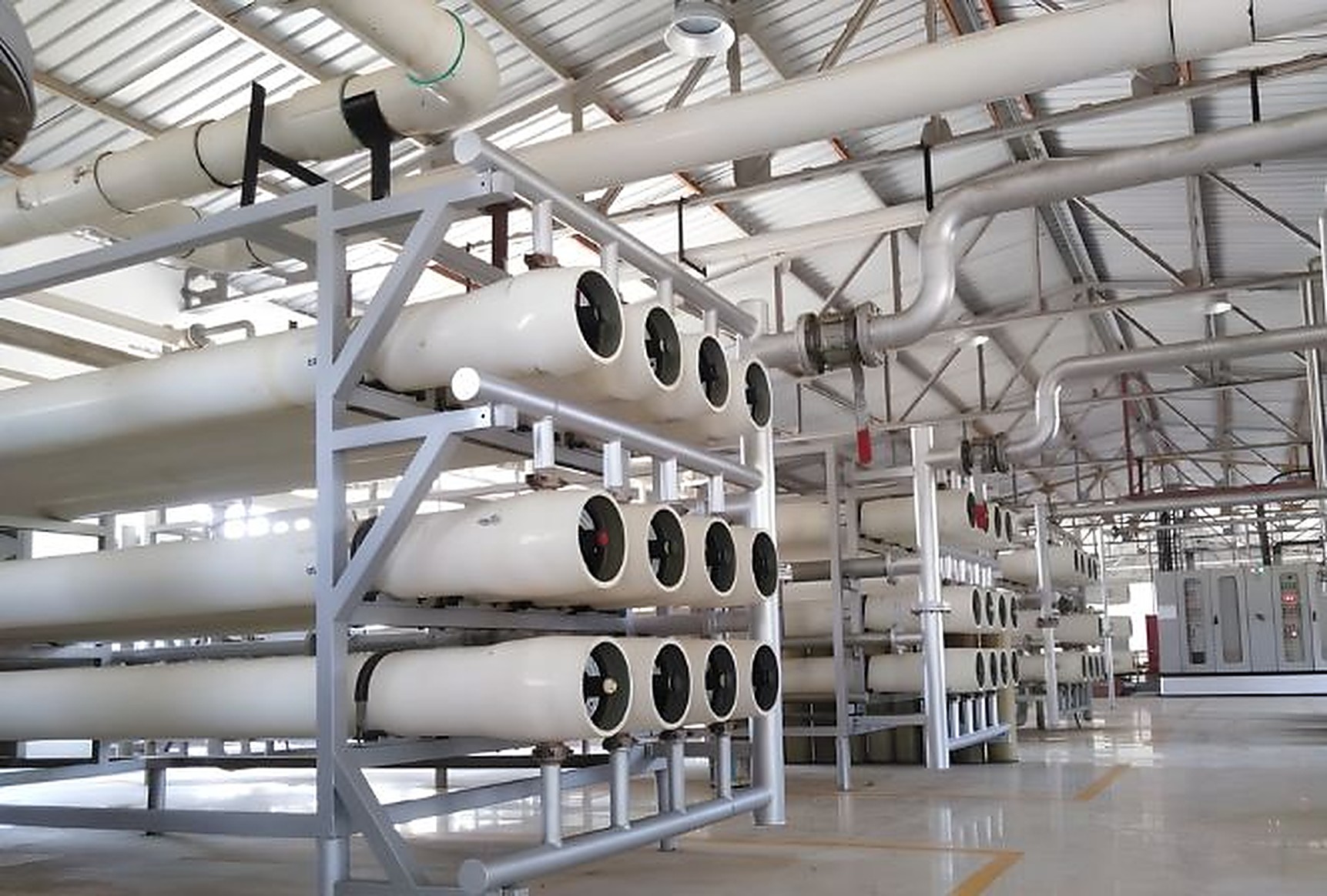
A high-pressure pump drives feed water across the membrane array. Permeate passes through; rejected salts leave as concentrate at controlled recovery.
Post-treatment and storage
Permeate is polished as the application requires — UV, mineral dosing or ozone — then stored in food-grade tankage ready for distribution.
Engineering detail
What you get with an AQUASTAG ro plants system
Pre-treatment engineered first
The front end is designed against your actual feed analysis. It is the single largest determinant of membrane life and of what the plant costs you to run.
Correctly staged arrays
Pressure vessels are arranged so crossflow velocity stays within specification across every stage — protecting the tail elements that fail first in badly staged plants.
Instrumented for real operation
Inlet, permeate and reject conductivity, stage pressures and flow are all measured. Operators can see fouling developing instead of discovering it at failure.
Built for continuous duty
SS 304/316 skids, industrial pumps and control panels specified for plants expected to run continuously rather than intermittently.
CIP provision from day one
Clean-in-place connections are designed in, so membranes can be chemically cleaned on schedule rather than replaced prematurely.
Documented at handover
Commissioning records permeate TDS, recovery and salt rejection against design — an auditable baseline for every future service visit.
Specifications
Technical data
| Capacity range | 250 LPH to 10,000+ LPH (higher on request) |
|---|---|
| Membrane type | Thin-film composite (TFC) spiral wound |
| Typical salt rejection | 96–99% depending on feed and staging |
| Typical recovery | 45–75%, set by feed chemistry |
| Pre-treatment | MGF + ACF + softener or antiscalant + micron cartridge |
| Skid material | SS 304 / SS 316 / powder-coated MS |
| Control options | Manual, semi-automatic or fully PLC-controlled with HMI |
| Post-treatment | UV, ozone, mineral cartridge or blending as specified |
Ranges shown are indicative. Final specification is confirmed against your water analysis and duty requirement.
Where it is used
Typical applications
- Pharmaceutical process and purified water
- Food processing and beverage production
- Packaged drinking water plants
- Hospitals, dialysis and laboratories
- Hotels, resorts and large kitchens
- Boiler feed water for high-pressure steam
- Educational campuses and hostels
- Manufacturing process water
Questions
RO Plants — frequently asked
Straight answers, including where this system is not the right choice.
What does an industrial RO plant cost?
Cost is driven by capacity, by feed water quality and by the degree of automation, and any figure quoted without a water analysis is guesswork. A high-TDS borewell feed needs considerably more pre-treatment than a municipal supply at the same output. We test your water, size the plant properly and quote against a defined specification so you can compare like with like.
How long do RO membranes last?
With correct pre-treatment, scheduled cleaning and stable operation, two to three years is a realistic working life, and often longer. Membrane life is almost entirely a function of what reaches the membrane face — which is why we treat pre-treatment design as the core of the plant rather than an accessory.
How much water goes to drain as reject?
Recovery typically sits between 45% and 75%, set by feed chemistry and the scaling limits of the dissolved salts present. Pushing recovery beyond what the chemistry allows causes rapid scaling. Where water is scarce or discharge is restricted, reject can often be routed to gardening, flushing or cooling make-up.
Can you upgrade an existing RO plant instead of replacing it?
Frequently, yes. Many underperforming plants have serviceable skids and vessels but inadequate pre-treatment, worn high-pressure pumps or failed instrumentation. Our upgradation and retrofitting service assesses the existing asset and restores performance where that is the sounder commercial decision.
Do you provide operator training and AMC?
Yes. Handover includes operator training on start-up, shutdown, routine checks and log-keeping. Annual Maintenance Contracts cover scheduled servicing, membrane cleaning, consumable replacement and priority breakdown response.
Client feedback
What our clients say
Water treatment is bought on trust, because most of what it does is invisible. These are the outcomes our clients describe.
Our borewell was running at 1,150 ppm and the previous plant could not hold output through a full shift. AQUASTAG re-did the pre-treatment before touching the membranes, which nobody else had suggested. Two years on, the permeate is still under 40 ppm and we have not replaced a single element.
We had scale building up in the boiler within weeks of every descaling. They tested the water, showed us the hardness figures and sized the softener against our actual steam load rather than quoting a standard model. Salt consumption came in almost exactly where they said it would.
Every bathroom in the block had yellow-brown staining and the residents were convinced it was the plumbing. AQUASTAG identified dissolved iron in the borewell and installed an iron removal filter ahead of the softener. The staining stopped completely within a fortnight.
Related
You may also need
Hardness removal · Ion exchange
Water Softeners
Ion-exchange softening plants that strip calcium and magnesium out of hard borewell and municipal water, protecting boilers, chillers, laundries and every heated surface downstream.
Scale control · Zero discharge
Water Conditioners
Salt-free, zero-discharge scale control that stops limescale forming on heated surfaces while leaving the natural mineral content of the water intact.
Biological treatment · Water reuse
Sewage Treatment Plants (STP)
Compact biological sewage treatment plants that meet pollution control board discharge norms and turn wastewater into a reusable resource for flushing and landscaping.
Need a ro plants system sized properly?
Send us your water analysis or just describe the problem. An engineer responds within 24 working hours.